On the Peculiar Notion of Not Homes
The speaker contemplates how relationships are like houses while dealing with their partner’s mental illness.
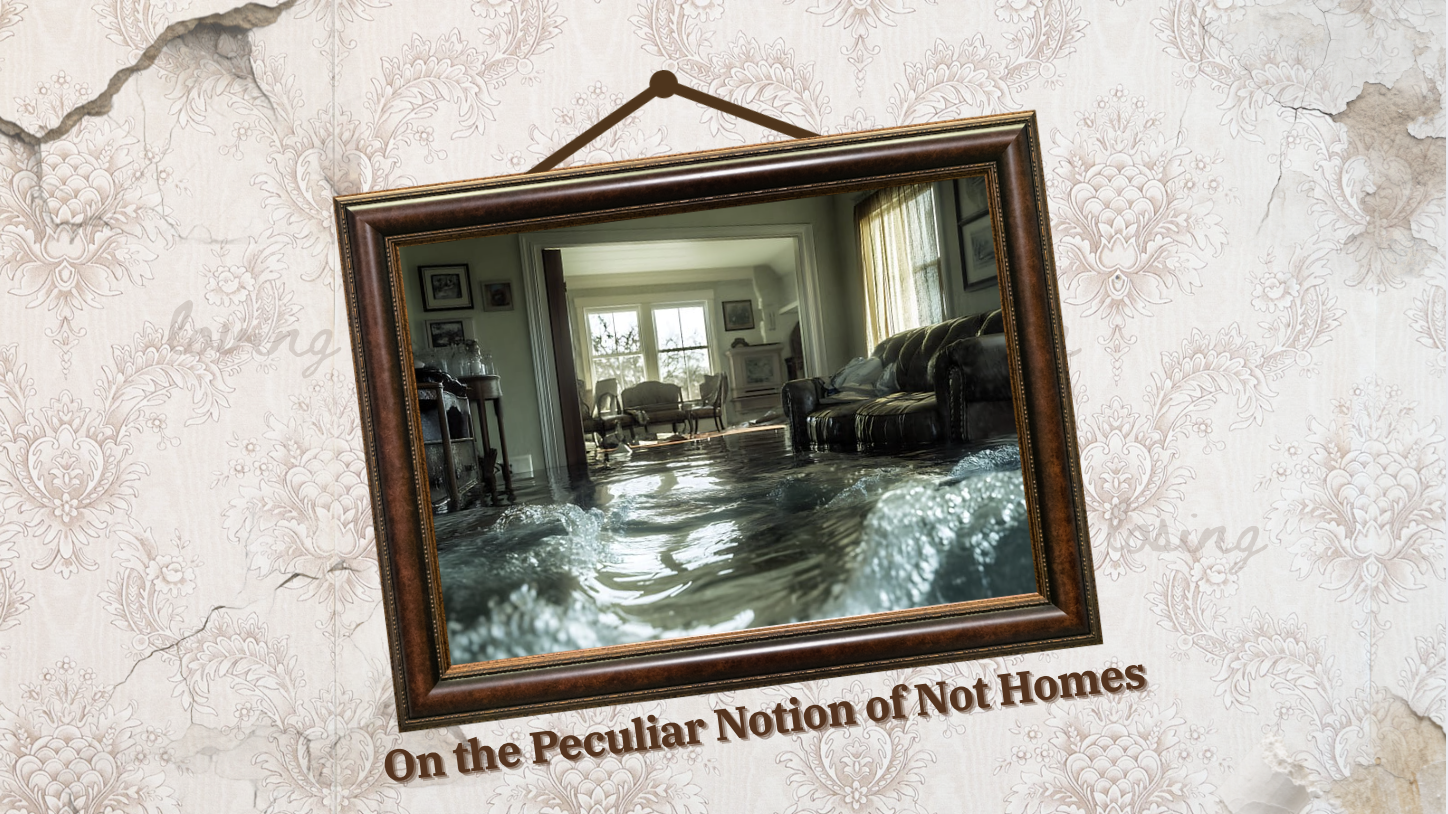
Like many of the works on this website, On the Peculiar Notion of Not Homes was inspired by Mike Flanagan’s incredible creative work. Some of the specific imagery is taken from the very end of the series The Haunting of Bly Manor, but the crux of the piece is a metaphor that I think of time and time again - keeping up a relationship is exactly like keeping up a house. I think the structural and literal work of maintaining a physical building has interesting thematic ties to the work it takes to keep up a relationship, especially when you feel like you’re the only one trying and the only one with the capability to try. This is a story about a deeply complicated relationship but it’s one that I feel like many people have experienced and tried to rationalize. It’s not easy to take care of someone if you can’t also take care of yourself, and a home reflects the state of the people who live in it.
Read On the Peculiar Notion of Not Homes here:
Loving someone feels like a house.
Moving in, new and shiny, new stove; finding a home for yourself in the nooks and crannies. Silver sunlight mornings and buying curtains to make them private. The way you touch behind locked doors is like a sacred pastime. There are windows and they can be one-way if you make them. There are doors that open only when you want them to.
Houses are big and empty, not that they have to be. That’s your choice, to fill them and with what. Your choice when you buy the couch in the living room with faux-velveteen seating that’s barely big enough for two people. It isn’t the act of buying things together but it is the act of knowing them together. Feeling them, together, the turn from there’s a door to the left of the bathroom to the door left of the bathroom, from a thing you’ve seen once, maybe twice to a thing that is now a part of you because you live in it.
You like the way a house molds around you and fits the parts of you that you didn’t know needed fitting. Who could have guessed late night tea was made best from ceramic kettles, who knew a person needed more bookshelves than they had books, just for the future of it.
It’s your decision, spectacularly, where the couches move and whether or not you shove the coffee table aside to slow dance together in the evenings just because you can. Leave the Christmas lights up until March without anyone telling you that you can’t, hang coats on the wrong hooks and wear your shoes past the mudroom unless someone you love tells you not to.
Sometimes houses come with things like flickering lights and lifetime guarantees of the cracked tile in the kitchen. Houses also come with things like leaky faucets that drip to remind you that you need to fix them. Dripping like late nightmares and alarms on your phones reminding you of bottles of pills in the bathroom cupboard. These are things you agree to fix together.
There are some bedrooms in some houses with doors that won’t lock and that becomes the first problem.
Bathrooms, too. Bathrooms don’t always lock and when they don’t and you can hear the faucet in the tub running you turn to the other side of the hallway and there’s a crack in the opposite wall, a fissure spreading, aching down to the ground and this.
This is how you know your house is growing old.
When a house grows old, it doesn’t happen all at once; nothing grows old all at once. It starts with the creaky limbs and joints and the floorboards making noise in the night. Then the silver-haired peeling wallpaper and dulled-up carpets. And you replace the stove with a new shiny new stove and you start to wonder: if you replace all the parts of a kitchen is it still the same kitchen? What about people? And you hire someone to come change out the cabinets and you watch someone you love swallow a new dose of pills and run the faucet in the tub at night and cracks form in the ceiling, and:
All of this feels like routine.
When a house grows old, it stops growing into you. The best kinds of houses feel for the threshold, the tipping point where you start to grow yourself into the walls and ceiling in the hallway and get swallowed up by the word home. The best kinds of houses will stop right there, right before you find yourself willing to climb in, and say not yet. Go on, and you find a new house and a new home. But those are the best kinds of houses and the best kind of houses are more like parents, who know when to unbuckle the seatbelt and turn off the nightlight. They were built that way.
Loving someone like that is easy but it isn’t substantial and you don’t feel it expanding like an air mattress in your chest at night, aching so deeply to be permanent. So you go to the next best type of house, the kind that grows old and grows into you more and traps you intentionally until everywhere you turn the ceiling is just above your head and the walls brush your fingertips and there’s a door you can’t unlock at the end of the hall.
But not all houses are like that, not when some grow old and grow back. Time doesn’t turn all things fragile, some of them it just wrecks. In the breathing in and out at night and trying not to see childhood ghosts at the foot of your bed, sometimes a house can grow a person wild and run them ragged, paging through family photo albums trying to recognize themselves in front of that fireplace, in the eyes of that smiling kid at the dining room table.
So you start to remember – though you hadn’t in ages – that you’re the kind of person familiar with things carving out space away from you. And the house grows away like warm hands bigger than yours did. The sound of your father’s keys and your mother’s footsteps was not a good memory, not like the clink of wine glasses and the whisper of bed sheets that meant they might leave you alone, and all of a sudden you’re back to big, empty houses.
This house feels so much bigger and emptier the longer you think about time passing, so you try to force yourself to stop, and you try to stop yourself from forcing the issue. If you add another bottle of pills to the others not for you lining the cabinet, that’s when you’ve lost the fight.
The answer to every question is: this house isn’t you and it isn’t about you. You water the plants and wash the dishes and make the bed in the mornings and take out the trash and check the baseboards for mold and do everything you can not to feel too attached to the before of it, when touching the back of the couch in the living room wasn’t the closest you got to touching something. Little hairs on your arm reaching out for the love of faux-velvet stability.
You are a faux-velvet couch and you are here to take care of other people. One other person, with wet hair and downturned lips and losing confidence, you try not to quit your job, not to quit yourself because this isn’t about you. It’s not because of you and as much as you would shoulder it it’ll have nothing to do with you when it’s over – like it will be, it will be over – because you’re tangential to this repetitive cycle. You were an upset once, and you aren’t anymore. Because the house grows old around you, the cracks in the ceiling and the running water in the tub become routine, and now you’re just part of the equation. One more thing to say I’m fine to.
You’re not at home in the nooks and crannies. You’re not at home in the facts you learned and the places you found for yourselves and the things you made together. You’re home in the sunlight of the backyard where it all feels a little less real. Where you can pretend you own nothing together. You’re meeting each other for the first time, and you can start the circle over and try a little harder this time not to let it get this way, even though it isn’t, it isn’t, about you.
Loving someone feels like a house. So does losing someone, losing someone feels like a house.
It feels like watching the floor collapse in on itself and the walls drip with black mold and you can do nothing to stop the ceiling from hanging low, sagging with the weight of water. The moment where you realize your own humanity and you want so badly to hug yourself into every crevice of everything you ever loved and recognize yourself in them, but that’s the thing about houses; because in the end they’re always incompatible with humans.
Losing someone is the end of the goddamned world. Losing them on purpose is like setting a match and watching yourself from far away drench the front hall in gasoline, but losing them without trying is suffocating under the weight of your own bad expectations. You drown the pills in the medicine cabinet in order to try again at being sturdy and good enough, and then you dig the orange bottle out of the toilet bowl because?
This house isn’t about you.
And you can’t walk away. You can only wake up in silver sunlight one morning to find the privacy is gone and you’ve been thrust back into the world with no intentions of ever setting foot in this broken, breaking house again. It isn’t your fault, but it isn’t not your fault either. It’s not your fault you were tangential, it’s your fault that you ever bothered to unpack your bags in the drawers before you got to the end of signing the lease.
Losing someone feels like a house. Burning down and breaking from the inside. Drowning, you think you should’ve known better. Breathing, you think, belongs to the insulation in the walls that should have protected you but couldn’t have protected anyone you loved better.